About Demineralisation Plant
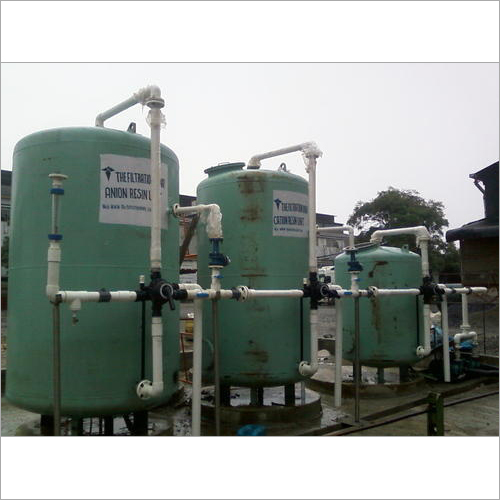
This ergonomically developed Demineralization Plant is capable of removing mineral salts present in water. This plant adopts advanced ion exchanging process. Advanced mechanism of this equipment effectively eliminates mineral ions like iron, calcium, sodium, copper and anions like sulphate, nitrate, etc found in untreated water. Provided Demineralization Plant is user friendly and its maintenance charge is low. Standard of this plant has been verified on the basis of its service life, production cost, output, dimension etc. This low cost system has been developed by seasoned personnel by following cutting edge technical knowledge. Easy to install, its maintenance charge is affordable.
Efficient Water Demineralisation for Industrial NeedsOur demineralisation plant ensures the removal of dissolved minerals and salts, delivering ultra-pure water for various industrial applications. Featuring advanced pre-treatment and robust ion exchange technologies, it provides reliable performance and consistent output, significantly reducing mineral scaling and enhancing equipment longevity.
Integrated Control and AutomationChoose between semi-automatic and fully automatic operations, both empowered by an electrical control panel with easy-to-read indicators. This design assures smooth, user-friendly operation while minimizing manual intervention and optimizing system efficiency.
Durability and Flexibility in DesignEngineered with high-grade FRP and epoxy-coated mild steel, the system endures harsh industrial settings. Installation is straightforward with a skid-mounted structure, and customization is available to suit specific space or process requirements, making it adaptable for diverse production environments.
FAQ's of Demineralisation Plant:
Q: How does the demineralisation plant achieve such low outlet conductivity levels?
A: The plant uses a combination of strong acid cation and strong base anion exchange resins, which effectively remove dissolved ions from water. This dual-stage treatment, preceded by multigrade sand and activated carbon filters, ensures outlet conductivity remains below 10 S/cm.
Q: What are the main benefits of using a semi-automatic or automatic Demineralisation Plant?
A: Semi-automatic and automatic operation reduces manual involvement, improves consistency in water quality, and allows for easy monitoring and adjustments via an electrical control panel. This increases operational efficiency and helps maintain optimal system performance over time.
Q: When should the resin inside the plant be replaced or regenerated?
A: Under normal operating conditions, the resin's service life ranges from 2 to 3 years. However, resins should be monitored and regenerated regularly as per schedules, using hydrochloric acid and sodium hydroxide. Replacement is recommended if there is a decline in water quality or resin efficiency after the typical lifespan.
Q: Where is this plant typically installed and used?
A: This plant is commonly used in industrial settings that require demineralized water for processes such as boiler feed, electronics manufacturing, pharmaceuticals, and laboratory applications. Its skid-mounted design allows for straightforward installation in various industrial environments across India.
Q: What is the installation process for this demineralisation plant?
A: The plant is supplied as a skid-mounted unit, which simplifies the installation process. Upon delivery, it requires connection to the electrical supply (220-415V AC, 50 Hz), raw water inlet, treated water outlet, and drain lines. Customization is available to match specific site requirements.
Q: How do the pre-treatment filters enhance the overall performance of the plant?
A: Pre-treatment with multigrade sand and activated carbon filters removes larger particulates, chlorine, and organic matter from the incoming water. This process protects the ion exchange resins from clogging and fouling, extending their service life and improving system efficiency.
Q: What factors influence the plant's capacity and flow rate?
A: Capacity and flow rate are determined by the number of membranes (2-8 standard 4040 or 8040 membranes), piping material, and other configuration choices. Models can be customized for flow rates and dimensions as per specific industrial requirements, ranging from 500 to 1000 Ltr/hr.



 Send Inquiry


 Send Inquiry


 Send Inquiry
 Send SMS
